It’s time for clocks to “fall back”, which means drivers should move forward with good nighttime safe truck driving habits, especially during normal rush hour times between 6am-9am and 4pm-7pm. With fewer daylight hours, drivers who are not used to driving in the dark will need to. What’s one of the biggest issues on the road once the sun goes down? Decreased visibility.
As visibility decreases, drivers have less time to react to hazards on the road. Even with high-beam headlights on, visibility is limited. Depth perception, color recognition and peripheral vision can also be compromised in the dark, and the glare of headlights from an oncoming vehicle can temporarily blind a driver. To keep themselves and other vehicles on the road safe, drivers should maintain a “Safety Cushion” around their vehicle whenever possible.
Another way to stay safe while night driving is to install a reliable truck battery with plenty of power to keep headlights and other safety features up and running.
Fahrenheit batteries have the added reinforcement and auxiliary power to not only start the engine but keep the lights on too.
Night Truck Driving Safety Tips:
Minimize distractions
Adjust and clean mirrors
Don’t overdrive your headlights
Maintain wipers and wiper fluid
Clean windshield and all windows
Keep eyes moving to avoid eye fatigue
Beware of animals on or near roadway
Don’t look directly into oncoming traffic
Clean headlights and all lights/reflectors
Headlights on at dusk and inclement weather
Reduce speed and increase following distance
Dim your dashboard lights and avoid other lighting in cab
In a two-day delivery kind of world, fleets are under a lot of pressure. Fast deliveries. Minimizing downtime. Tight budgets. It’s a lot.
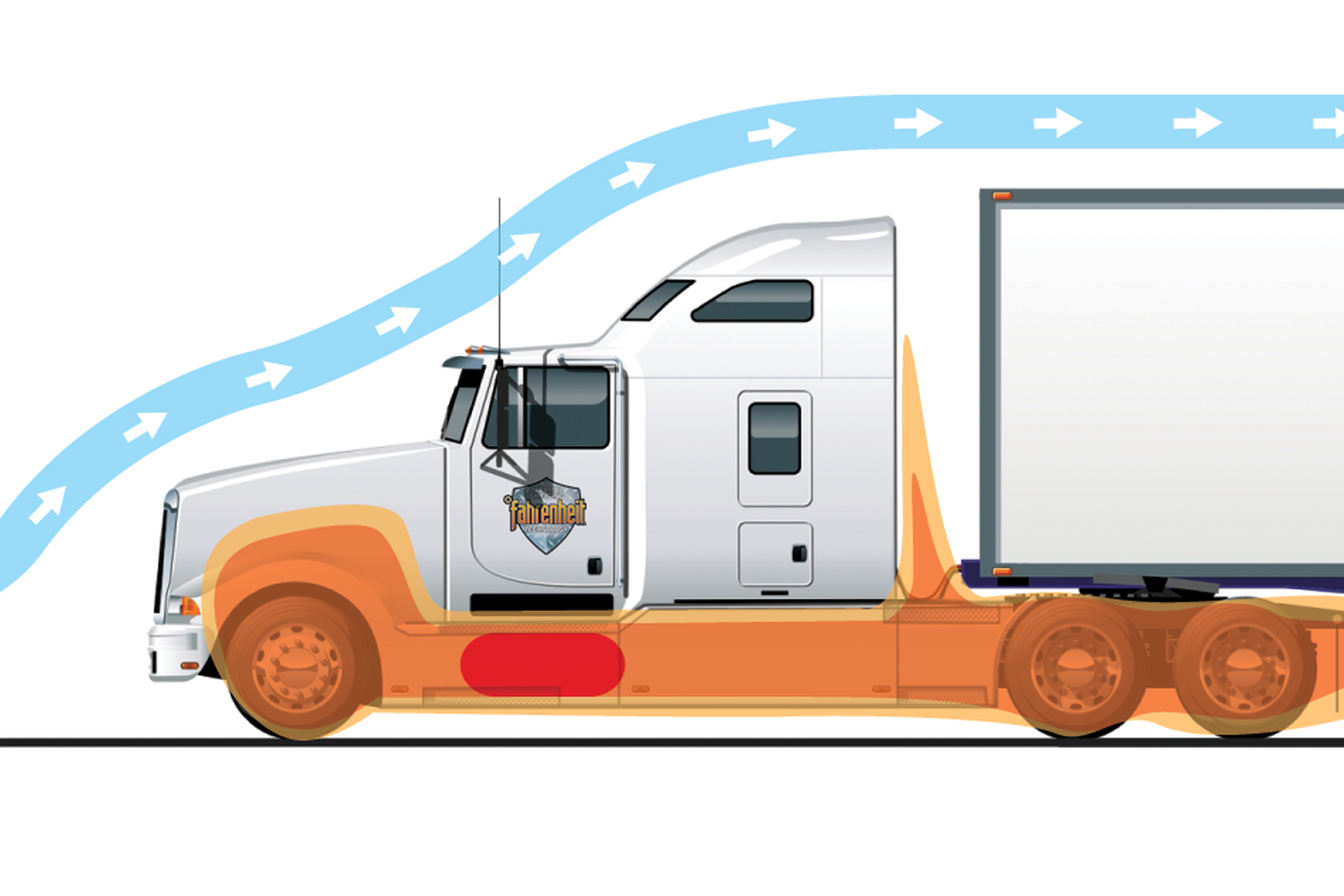
All of that means that fleets need to run as efficiently as possible, and that starts with the design of the truck itself. To meet the high demands fleets are up against, today’s trucks are designed to be as aerodynamic and fuel efficient as possible. Gone are the boxy, clunky cab designs of the past. New, sleek modern models have improved aerodynamics to combat wind resistance and improve fuel efficiency. Roof fairings and exhaust pipes have been redesigned and skirting has been added to redirect airflow that would otherwise slow truck speed and guzzle gas.
However, new designs bring new challenges. Redirecting cooling airflow really turns up the heat on components found under the cab. This is especially true when it comes to truck batteries. Hot battery boxes can cause thermal runaway within the battery which leads to much shorter life and even complete failure. And what happens when a battery fails? Nothing, until you replace the battery.
To avoid the wasteful downtime that comes from unexpected truck battery replacement, it is important to choose the right kind of technology for your fleet. Fahrenheit truck batteries are built with exclusive Thermal Shielding Technology that protects internal components from heat damage and extends battery life. That keeps trucks on the road, deliveries on time, and budgets out of the red.
Commercial trucks are everywhere. From the east coast to the west, and everywhere in between, trucks are hauling and delivering products. As a result, trucks may encounter different climates and conditions during the same trip.
Extreme conditions take their toll on truck parts which are already being put to the test. Even in the best circumstances, parts like batteries can take quite a beating when a truck is on the road day after day. Every stop and start demands a lot of power. Additionally, severe climate conditions, long routes, and frequent stops can push batteries to their limit. Using hot batteries in a hot climate forces a part that’s already working hard to work even harder. Batteries that can’t take the heat certainly won’t handle the extra starting efforts required in the cold.
Today’s truck drivers need to be ready for anything, and so do the batteries they rely on. Using commercial truck batteries that can’t stand up to these challenges will lead to unexpected failures, which always seem to happen at the worst possible times. That’s why fleets need parts with the right technology to power them through every extreme condition they encounter.
When a tough work out leaves you feeling dehydrated, would you rather have a full glass of water, or only a few sips? You’d want a full glass to help rehydrate and replenish what was lost when you were sweating it out.
Did you know your truck’s batteries get thirsty, too? Commercial truck batteries work hard to deliver continued cycle service and power many auxiliary and hotel loads. All of that hard work can lead to batteries experiencing “power dehydration,” which means they need to be properly recharged.
Keeping batteries charged at optimal levels is like drinking a full glass of water post workout. A full glass for a battery is like having it fully charged at 12.6 volts for flooded or 12.8 volts for AGM. Batteries that are only half charged or have less than 12.2 volts may not have enough power to keep trucks up and running on the road.
To keep batteries from being thirsty for power, it is best to keep commercial truck batteries above 12.2 volts. That keeps them running longer and equipped to power stronger.